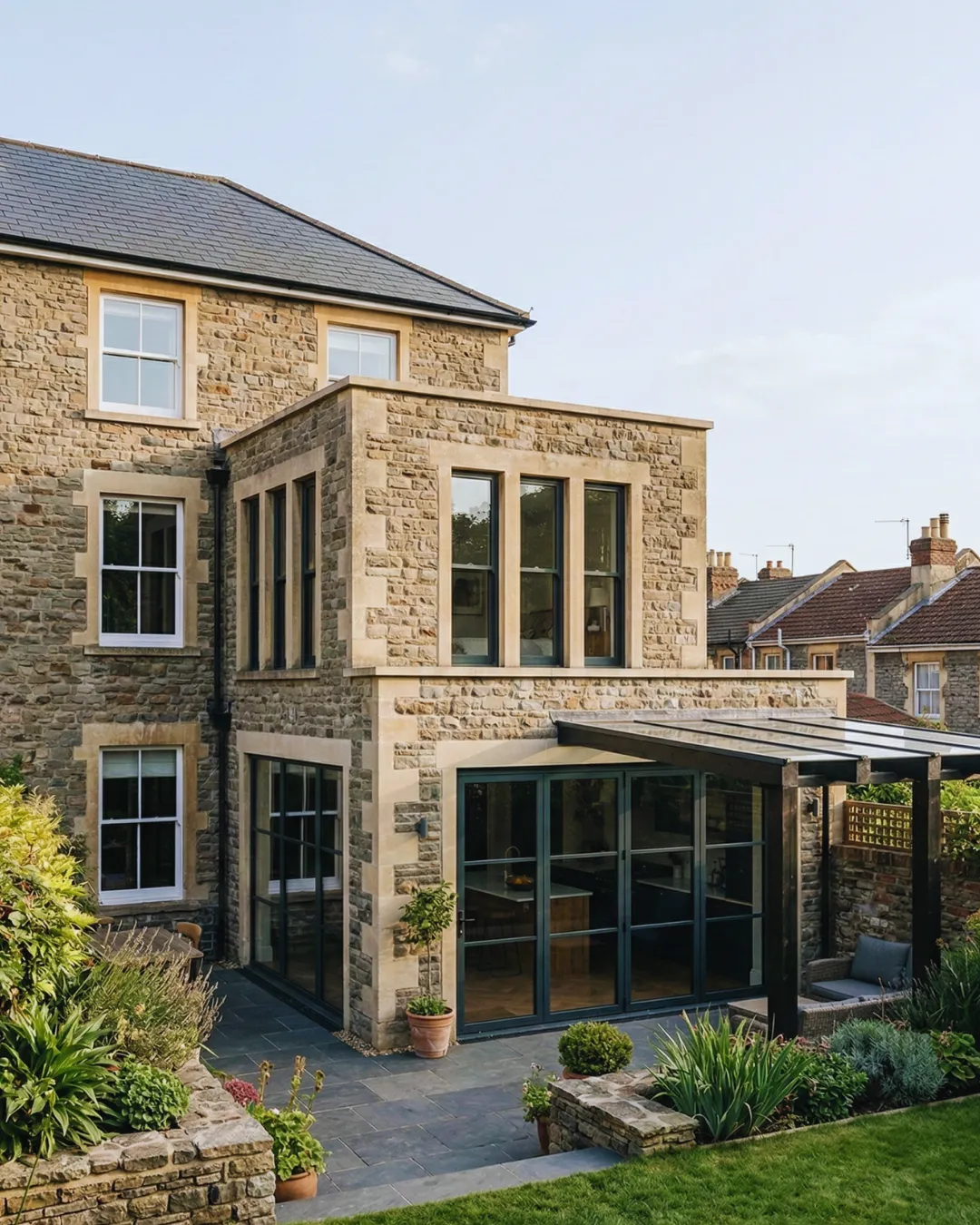
Single vs Double-Storey Extension: What’s Right for You?
Single vs Double-Storey Extension: What’s Right for You?
If you’re planning to extend your home in Bristol or Bath, one of the first strategic decisions is whether to build single-storey or double-storey.
Both options create space.
But they serve different long-term goals.
At a glance:
Single-storey: Lower upfront cost
Double-storey: Better value per m² long-term
The right choice depends on your property, budget, and future plans.
Single-Storey Extensions
Single-storey rear extensions are the most common option for growing families.
Why homeowners choose single-storey:
Lower overall investment
Simpler structural requirements
Faster build programme
Ideal for open-plan kitchen-dining spaces
They’re particularly effective when the main goal is improving ground floor layout and flow — creating a larger kitchen, better garden connection, or more natural light.
Typical Cost Range (2026)
In Bristol and Bath, most single-storey extensions fall between:
£70k–£120k, depending on specification and structural complexity.
Double-Storey Extensions
A double-storey extension adds space both downstairs and upstairs — increasing square footage without doubling foundation costs.
Why homeowners choose double-storey:
Greater long-term value per m²
Additional bedrooms or bathrooms
Improved property proportions
Stronger impact on resale value
Because foundations and roof structures are shared, the cost per square metre often works out more efficient than building two separate projects.
Typical Cost Range (2026)
Double-storey extensions typically range from:
£120k–£200k+, depending on complexity and finish level.
Key Differences to Consider
1. Budget vs Long-Term Strategy
If you need improved living space now and want to control upfront spend, a single-storey extension often makes sense.
If you’re thinking long-term — adding bedrooms, future-proofing for teenagers, or maximising resale value — a double-storey extension may deliver stronger returns.
2. Planning & Structural Impact
Double-storey extensions:
Alter structural load paths significantly
Require more complex engineering
May face stricter planning considerations
Single-storey extensions are typically more straightforward — though structural steel and temporary works are still required in most cases.
3. Garden Space
Both options extend outward, but footprint size matters.
In tighter plots (common in parts of Bristol), careful design is needed to protect garden usability and natural light.
When Does Each Make Strategic Sense?
Choose single-storey if:
✔ Your priority is a larger kitchen / open-plan living
✔ Budget is capped
✔ You don’t need additional bedrooms
✔ Planning constraints limit height
Choose double-storey if:
✔ You need more bedrooms or bathrooms
✔ You’re thinking 10+ years ahead
✔ You want stronger long-term value
✔ Your property can structurally and visually support it
Final Thoughts
Extensions aren’t just about adding space.
They’re about improving how your home works.
In many areas of Bristol and Bath, the right extension strategy can outperform the cost and disruption of moving.
The key is early feasibility — understanding structure, budget, and long-term goals before committing to design.
Planning an Extension in 2026?
We are now booking Summer projects.
Book your 30-minute JAS Feasibility Call and understand which option makes the most strategic sense for your home.
